The Art of Hiking

IMG_0924

Last night, Sam had to remind me that I’m an artist.

I know how this sounds. You’re probably picturing a delicious melodrama, complete with mascara-streaked cheeks. But the reality was tame—boring even—with the crescendo being the point in the conversation when Sam said my Pet Portraits and Critter Collages “show technical skill,” but aren’t really art.

Oh no he didn’t!

But I know this. And after dumping a boatload of excuses and misbegotten online business theories into our conversation, I realized that the best course of action was to just sit there and take it. Sam’s concern was real. Is real. And while he didn’t go as far to say that I’m wasting my time worrying about Etsy sales, he did make it very clear that I’m not realizing my true potential; that I’m not experimenting enough; that I’m afraid to make mistakes. And, he’s right.

In art, I strive for beauty, simplicity, and economy. I prefer to keep things tidy and controlled, and look for opportunities to re-use or re-purpose objects and materials. I surround myself with the things I do well, and ignore the things I don’t. The result: I’m not making real art because I’m afraid to make the mistakes that make art real.

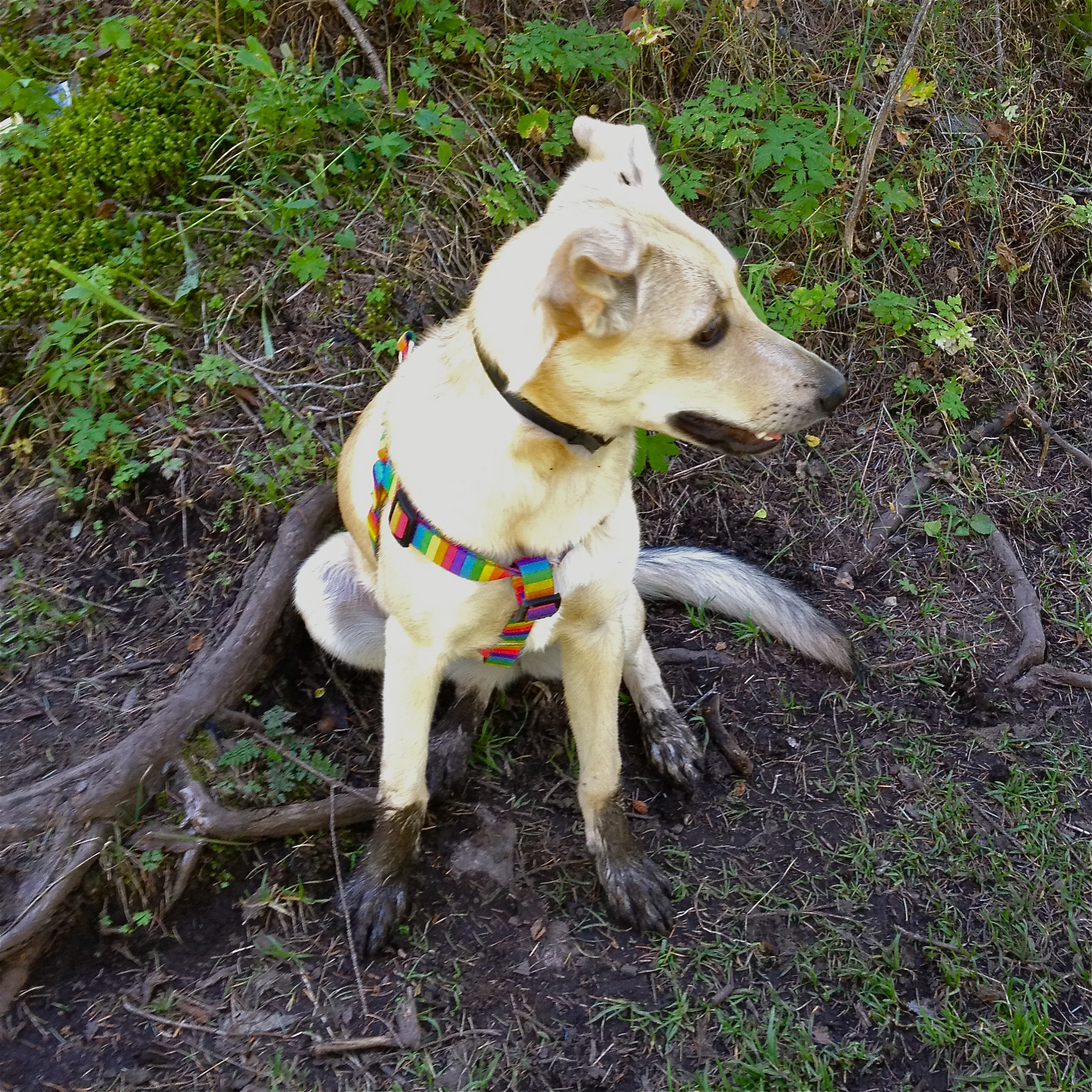
On a recent hike, my conversation with Sam followed me up a mountain, and back down again. Mishka and I were nearly back to the car when she spotted a cow, gently chewing and staring (as cows do) by the side of the trail. The cow watched Mishka intently as the dog picked up speed. My first instinct was to call Mishka back to me, but for a fleeting moment, my curiosity (or mischievousness) got the better of me: I wanted to see what would happen.

There is something about dogs being allowed to be dogs—the complete, uninhibited joy they express running, full tilt, nose to the ground through thick grass, or (in this case) chasing a cow. There exists an almost perfect pleasure in observing something being its truest self, free of control.

When we lose control (or the illusion of control), we are usually disoriented or entertained, frustrated, enlightened or frightened. But, the moment before we take action is also one of the few instances in our crazy, modern lives in which we’re fully present and capable of seeing a variety of possible paths.

This is where art happens.

I’ve gotten so wrapped up in my control of the artistic process that I’ve forgotten how to trust the materials, and my talent. I’ve been so focused on economy and efficiency that art-making has stopped being a form of meditation, or a means of discovery. Tragically, I have distilled art down to its component parts: technical skills and end products.

Sam, during one of several pep talks, told me, “You don’t need to shit diamonds all of the time. Sometimes it’s diamonds, but sometimes it’s just shit.” Right again, husband. This little bit of wisdom reaches beyond art, too. Making mistakes is messy, expensive, and downright inconvenient. But ignoring the process (of art, of life) means missing out on some of the richest parts.

This is what I’ve decided: My art-making process should be more like my hikes. When I hike, I move slowly and steadily; I keep all of the things I need within easy reach; I take time to stretch, to breathe, and to look around; I find extreme joy and satisfaction in seeing how far I’ve come, but always feel motivated to push myself a little further; I focus on the process, not the goal; I turn back when I’m tired; and every time, nothing makes me happier than giving Mishka a few extra minutes off the leash.
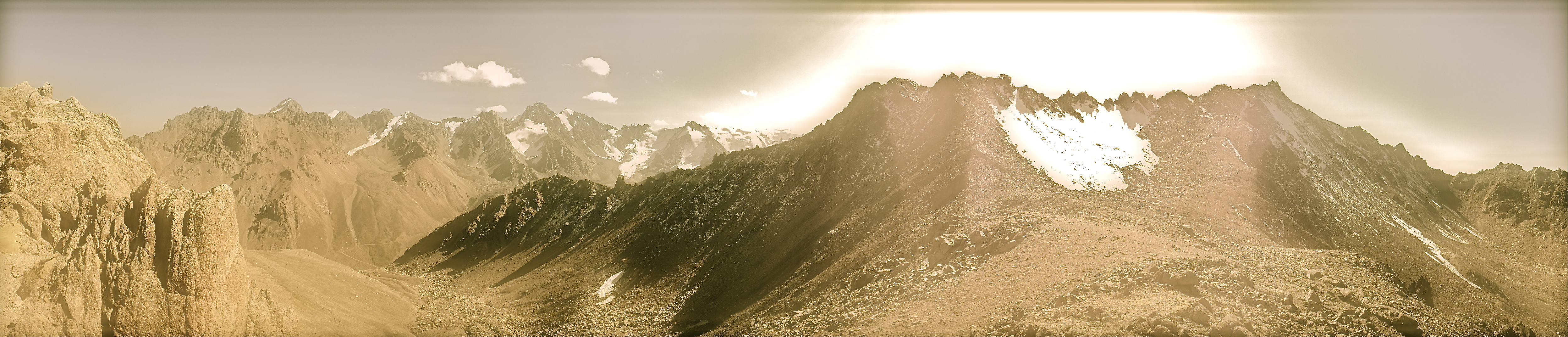
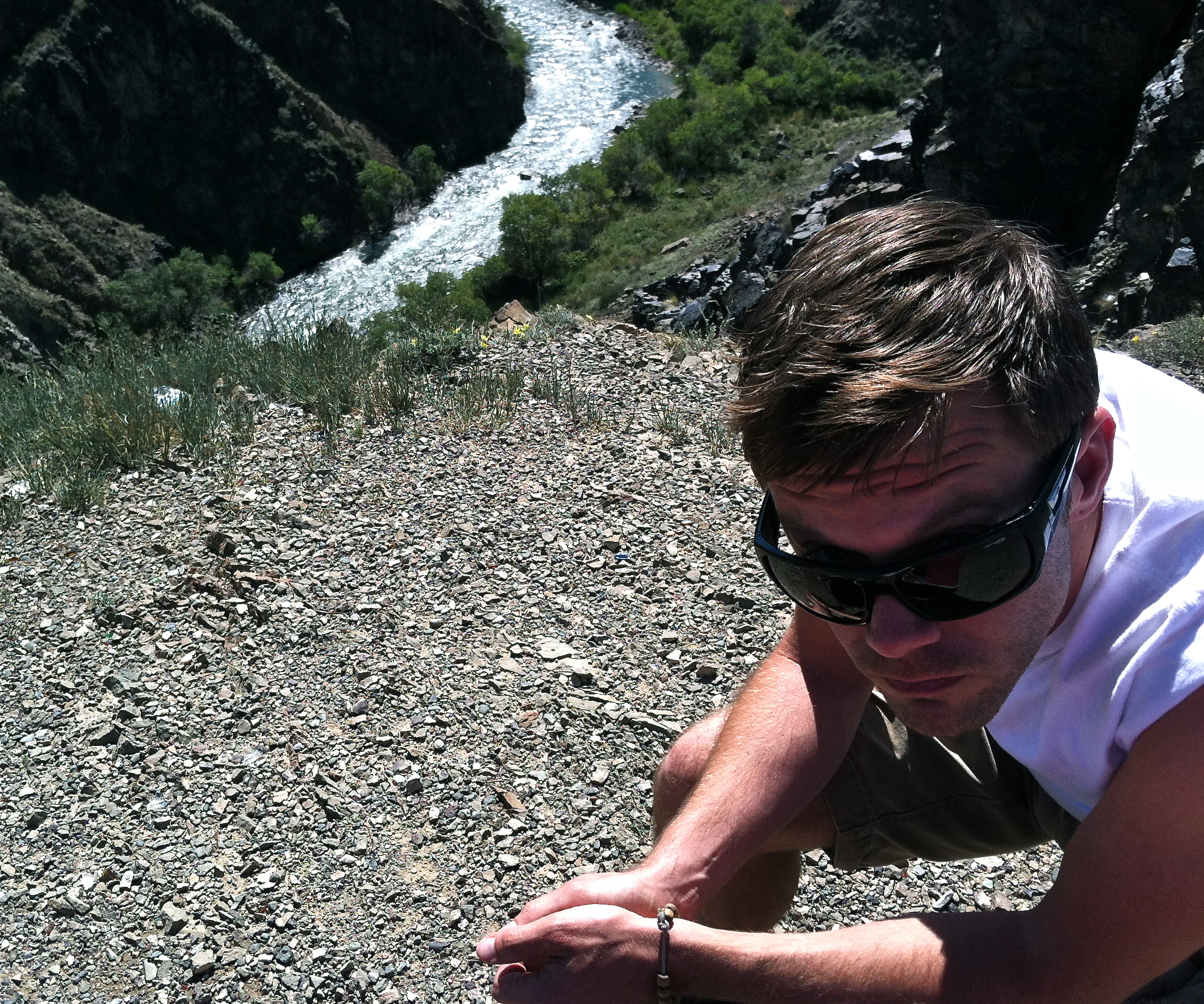
Photo courtesy Sam Kraegel

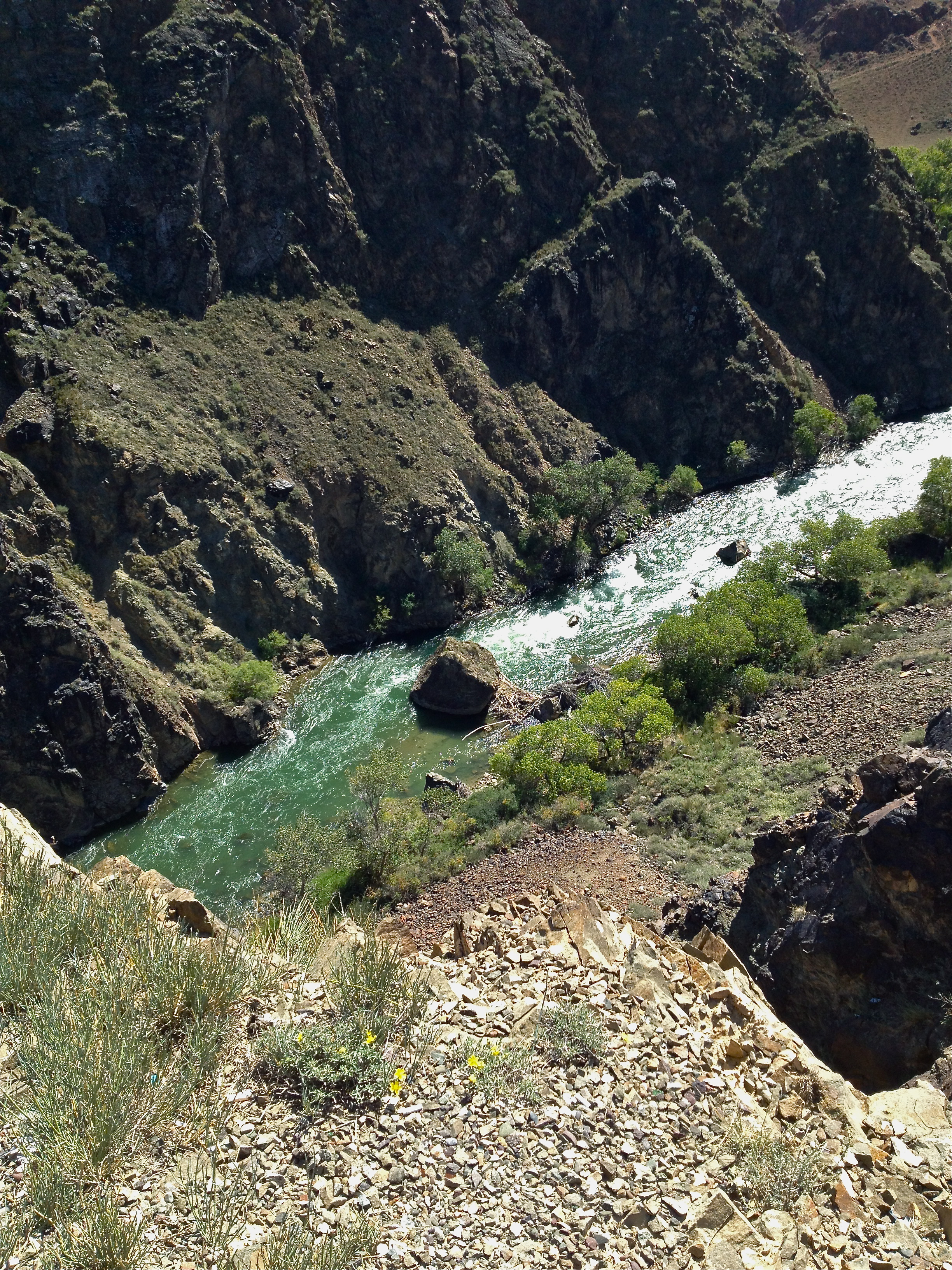
Photo courtesy Sam Kraegel.
F*ck yeah, ‘Merica!

IMG_1784
I have just reached the conclusion of my two-week American sojourn. (For the curious, the trip went something like this: Almaty – Amsterdam – London – DC – Baltimore – DC – Chicago – DC – New York – Amsterdam – Almaty.) As I write this, I’m feeling more tired than inspired—but tired in a good way, like after swimming or spending a day in the sun.

On my first night in the states, a friend’s step-brother asked, “So, where’s home for you?” and in all likelihood he was asking me where I grew up. But the dim bar lighting and heavy dose of jetlag gave the question impossible weight. “Where, indeed!” I thought, and sat in a semi-stupor wondering if the answer to his question was Chicago, DC, or Almaty.

Let me explain: Chicago is not my home because I didn’t grow up there. But, Chicago is where my family lives. I lived in Washington, DC for nine years, but if Chicago isn’t home, then DC surely can’t be either. And Almaty? Well…

Probably the most surprising thing about America was finding out, upon my return, that very little had changed. In the three-and-a-half months that I’ve lived in Kazakhstan, my life has changed significantly—so why shouldn’t I expect to find America just as different?

But of course it wasn’t. In fact it felt, very eerily, like I never left. For sure, my time in Almaty has given dimension to my opinions about American customs, habits, and people, but what a relief it was to find that life hadn’t moved on without me! Baltimore was just as dingy and charming as ever; aside from a few new restaurants in my old DC neighborhood, I could still navigate with perfect ease; Chicago was impressive and friendly, just like I remembered.

I f*cking love America. (There, I said it.) This is why:

  • an abundance of gluten-free options
  • beef jerky
  • bitter beers, not served with a straw
  • bike lanes
  • bluegrass
  • brunch
  • cheddar cheese
  • chicken fajitas
  • clean, exhaust-free air—yes, even in the cities
  • country roads
  • corn fields
  • dancing at weddings
  • diversity
  • dogs (so many dogs! beloved pets, running partners, etc.)
  • drinking wine, wrapped in blankets, reminiscing
  • drugstores
  • early mornings
  • English
  • enough hot water for three (!) people to take a shower
  • Fahrenheit
  • Halloween candy
  • historic districts
  • irony
  • mimosas
  • my mom & dad
  • my brother and sister-in-law
  • my extended family members
  • my niece, Lily
  • nachos
  • old friends
  • peanut butter—oh, the variety!
  • peanut butter rice krispie bars (a.k.a. “Aunt Jan’s Good Bars”)
  • predictability
  • pulled pork
  • real coffee
  • recycling
  • Rock Creek Park
  • runners, runners, everywhere
  • sea level
  • sidewalks
  • signage
  • spicy food
  • summer street festivals
  • sushi
  • sweet potato fries
  • Target
  • the smell of fall; and
  • the National Zoo

Based on the list above, you may feel tempted to call me sentimental or superficial, even hedonistic. The truth?—I’m all three. I don’t believe that America is the greatest place on earth (in fact, it has a long way to go), but it is the place I know best. I see the world through American eyes, and find great comfort in its familiarity. Love and familiarity are, after all, very similar and easily confused.

Shortly after your airplane touches down in a new city, the pilot comes over the sound system to announce the local time and temperature. He thanks you and your fellow passengers for choosing his airline. He tells you at which gate you’ll be landing, and where you can pick up your baggage. And then he says this: “If this is your first time in [insert city name], we hope you enjoy your stay. If [insert city name] is your home, then welcome home.”

Was it exhaustion, relief, or something else that made tears spring to my eyes when this statement was made? Not just in Chicago, or in DC, or in Almaty, but in all three places. And with that, the impossible question posed to me just two short weeks ago had found its answer. What a lucky girl I am: I don’t have just one home—I have three.


Mama, I’m Comin’ Home

Lake number one, before sunrise.

Sam and I have been living in Almaty for just over three months. Lately, I barely avoid turning into a mushy puddle of nostalgia each time I: 1.) hear country music, or 2.) see pictures of corn fields. I’ve heard all sorts of things about culture shock, but most people agree that the three-month hurdle is the biggest one. This is when the novelty of living in a foreign environment officially wears off—when the charming hustle of the market becomes a source of frustration and anxiety; when you’ve completely exhausted the conversations you can have with your neighbors given the very limited amount of Russian you know; or when, frankly, you just get tired of filth and bad manners.

Happily, I am writing this entry while soaring high above the Atlantic Ocean, on the start of a two-week tour-de-America. I left my Almaty apartment 22 hours ago, and have just seven more hours in the air before I touch down in Washington, DC. (I should also note that I’ve been awake for almost 40 hours, and would like to give the goofy British flight attendants a slap on the face for skipping down the aisles shouting, “Rubbish, rubbish, anyone with rubbish?” OMG.)

Two weeks from now, Sam, Hank, and Mishka are the things that will coax me back on an airplane. Luckily, I also have the scenic Kazakh outdoors to return to. Confession: I missed last week’s posting deadline because I was preparing for a camping/hiking adventure. Destination: Kazakhstan’s Kolsai Lakes. This series of three, glacial meltwater lakes is situated just barely north of Kyrgyzstan—in the mountains, in the middle of the middle of nowhere. No doubt very few people have documented (or even thought about) this part of the world. The breathtaking landcape is virtually untouched by humankind, and sparingly dotted with sleepy, battered towns. There is only one road.

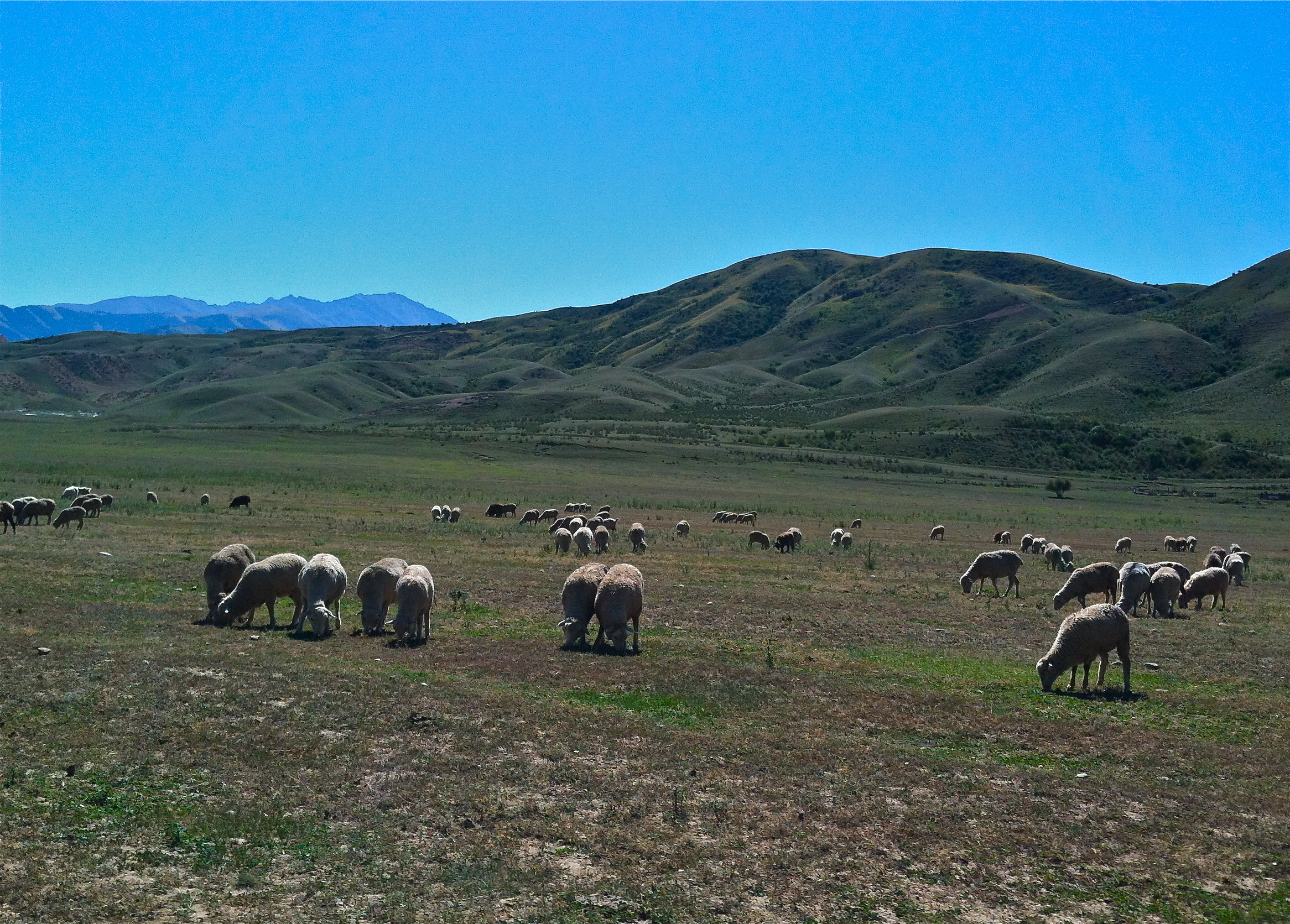
Our campsite was located close to the first lake, 6,600 feet above sea level, in a pasture filled with horses, cows, and yes, manure. We learned a lot about livestock while camping. First, cows eat in the middle of the night—right next to your tent. If you can imagine the sound of absolute silence, then you can imagine how intimately we got to know the full ruminant digestion process, complete with grass-ripping and laborious chomping (and re-chomping). Second, cows eat salsa. And when they’ve licked the bowl clean, they’ll knock your pots and pans off of the table, then shit in your campfire circle.

The hike from lake number one to lake number two was approximately twelve miles (round trip) through a rolling forested path with a killer incline at the end. We gained approximately 1,200 feet in elevation, and turned back at lake number two, resting quietly, 7,800 feet above sea level.

Over the course of the weekend, Mishka learned what being a dog is all about: hanging your face out of the car window, muddy wooded paths, cow patty snacks, horse-chasing. Who says dogs don’t smile?

Sometimes I forget that I live in Kazakhstan. It only ever lasts a few moments, and I suspect it’s a result of spending lots of time with my fellow American expats, or in the stunning Kazakh wilderness. Emerging from the fantasy is always jarring, disappointing, and leaves me muttering, “Oh my god, do I seriously live here?” I would compare the sensation to waking up and realizing that you have no idea where you are, but a few seconds of wide-eyed staring at the ceiling brings you back to reality. Unfortunately, my reality isn’t always comforting.

I have certainly considered the possibility that going home (if only for two weeks) will make the cultural adjustment process more difficult. It probably will. I’ve traveled through both Amsterdam and London today, and goddamn the western world feels good. It’s clean, it’s well labeled. It’s polite, helpful, and downright friendly.
Shortly into my Kazakhstan experience, I recognized that it was my American perceptions and expectations that occasionally left me feeling bewildered and wanting. But my American-ness is not going away. Luckily, optimism and humor are also American traits, and will be my most reliable tools as I ride out the storm.

IMG_0831

On the road.

IMG_0912

IMG_1274

IMG_0836

IMG_0842

IMG_0845

IMG_0855

IMG_0909

Matt and Megan chat with a gas station attendant.

IMG_0898

IMG_0894

Mishka supervises our camp setup.

IMG_0863

Matt makes some new dog friends.

IMG_0865

IMG_0887

IMG_0870

IMG_0869

Minerals in the water give the lake its beautiful turquoise hue.

IMG_0873

Our hiking cadre.

IMG_0878

IMG_1251


To market, to market

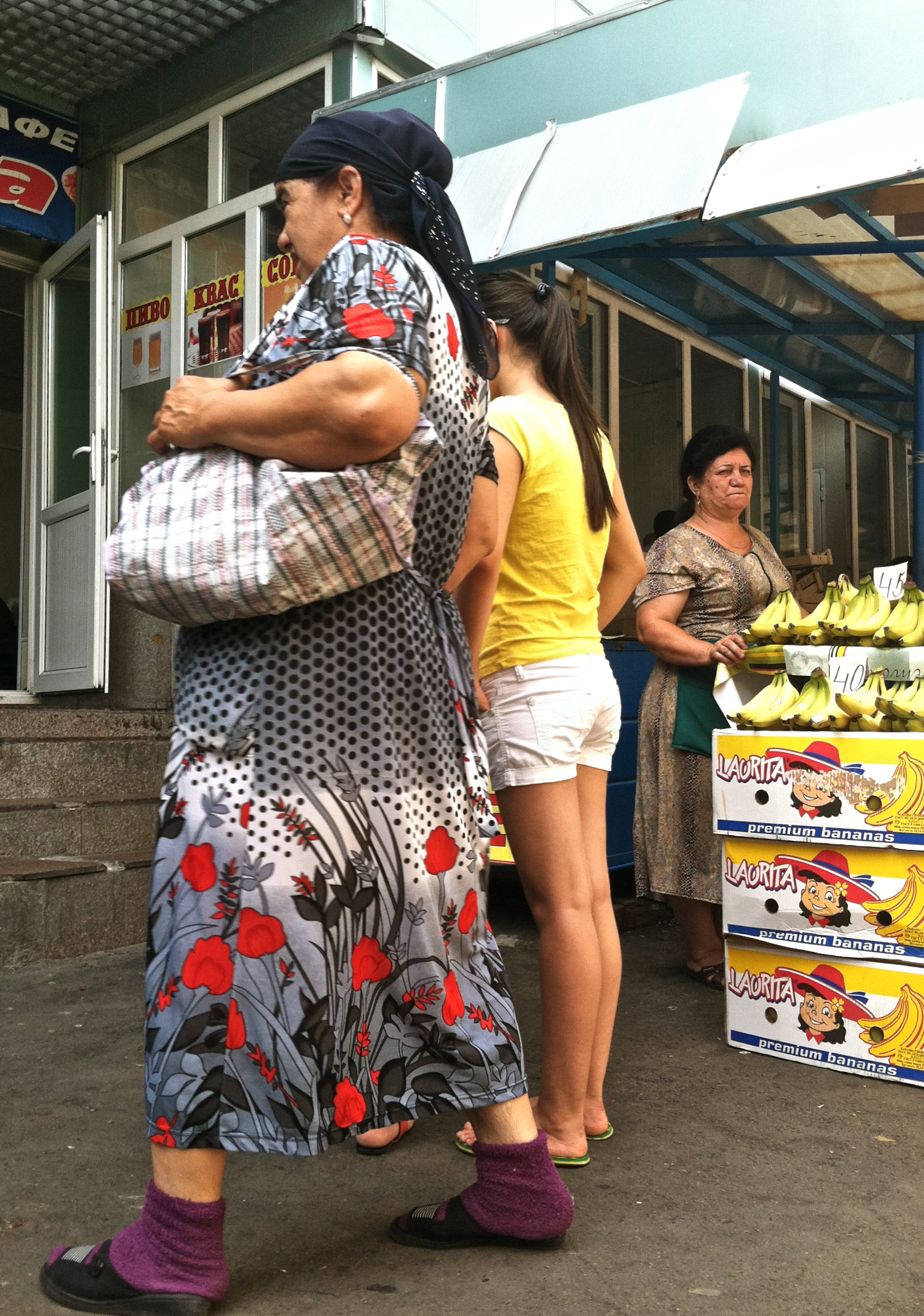
Photography is technically not allowed in Almaty’s Green Bazaar, so this collection of photographs was taken with my iphone as I pretended to text or check my email (hence the awkward angles). You’ll notice that a few watchful market patrons are on to me. You’ll also notice that the vast majority of market business owners are women, and that the variety of produce available (in the summer, anyway) is astonishing. The market, Almaty’s largest, is open Tuesday through Sunday.

IMG_0754

IMG_0749

Soviet staples: tomatoes & cucumbers.

IMG_0746

IMG_0747

300 Kazakh Tenge is equivalent to approximately $2.00. Prices posted in market booths are per kilogram.

IMG_0755

IMG_0750

IMG_0762

Hostile banana lady (one of several at the market). This one is on to me.

IMG_0766

IMG_0767

Korean food hall. (There is a sizable Korean population in Almaty.)

IMG_0757

IMG_0759

Dried fruits & nuts.

IMG_0761

fin

Three, two, one … Blast-off!

Gulp. With my heart in my throat, I clicked “Open Shop” on my Etsy site, Bells Barks & Babes. My first foray into online art-selling, this shop specializes in handmade, customizable items for one’s home including wedding certificates, pet portraits, and decor for baby’s room. (You can buy one of my original works of art there, too.)

"Critter Collage"

Customizable “Critter Collage”

This week, the time that I would typically use to narrate my misadventures in Almaty was instead dedicated to getting my shop up and running…aaand getting the government pre-employment process rolling, as I’ve recently accepted the position of CLO (Community Liaison Office) Assistant here at post. Since last week’s article, it appears, I’ve gone from having no job at all to having, well, two.

Meanwhile, Sam chose the ideal three-week period to hang out in Tashkent, Uzbekistan, as all of our things from the U.S. arrived in his absence. This means that I had to put everything away by myself…but this also means that I got to put everything away by myself! I may have spent the first 24 hours after the delivery eating rice cakes, spinning in circles, and cursing. But one week later, nearly everything has found a home.

That’s it for now, folks. Disappointed that you don’t have a lengthier blog entry to enjoy this week? Take a spin around my new shop instead: http://www.etsy.com/shop/BellsBarksBabes.

What Doesn’t Kill You

I’ve always prided myself in my ability handle change—and sometimes, even, seek it out. This is my inner artist speaking. If I see an opportunity to make something better, more functional, or more pleasing to the eye, I can’t resist the urge to do something about it.

Sam is constantly accusing me of “hiding” things in our apartment. What he calls hiding, though, is actually reorganizing, purifying, de-toxing. After four years together, he’s figuring out my various systems: things that hold things are very important, as are ease of movement through a space and smooth pillow cases and quilts. Items used daily may be left out on the little ledge in the bathroom; things used only once in awhile need to be stored in the hall closet.

My rules about object placement champion functionality first, then aesthetics (coming in at a very close second). And I reserve the right to change my mind about where things go. At any given time. Do I sound like a crazy person to you?

My tendency to want to change the world is really more about changing my world. It’s all about control. I’ve come to believe that I’m an artist because within the boundaries of an 8 x 8in. space (or 10 x 10in., or 11 x 14in. space, etc.), I have complete control. Everything that happens in that space happens because I put it there—when, where, how, why.

In my head, the battle that wages between change and control is glorious and epic. Like something from a comic book. BAM! Two arch enemies, equal in might and intellect meet on an illuminated battlefield! WHAMMO! It is impossible for one to defeat the other!

When I’m feeling particularly sorry for myself, I whine to my friends at home that, “everything in my life has changed!”—My daily existence is completely different. I don’t have a job. I have an entirely new set of friends, new running partners, new running routes. The language is different, the money is different, the people are different, the weather is different. Our apartment takes longer to clean. The vegetables take longer to clean. It’s kilograms, not pounds. It’s meters, not feet. It’s kilometers, not miles. It’s Celsius, not Fahrenheit. My iphone doesn’t work, and my feet are ALWAYS DIRTY.

In an attempt to control my new situation, I cling to things like never before. Weird things. I was devastated when I lost the crappy, temporary bike lock that I purchased here. I am hesitant to toss on my “new” cell phone (circa 2001), having just mastered its limited texting capabilities (even though the poor thing is giving up the ghost). Just six months ago, I would have been excited to see the blah bedroom rug being rolled up and lugged out of our apartment. Instead, despite the fact that I requested it be removed, I felt a major twinge of regret. And then, a bad haircut nearly sent me over the edge.

All of this has me asking: Can an individual potentially tolerate endless change? Does it depend on the nature and severity of the upheaval? Change is inevitable, for sure—our lives are always in flux (to some degree). But what is too much change, and can I successfully, gracefully make it a way of life?

Many thousands of years ago, nomadic peoples had systems in place that supported their portable lifestyles. Then, humans created agrarian societies in an effort to control the unknown—namely food production and consumption, but eventually also reproduction and the accumulation of wealth. But life in the foreign service feels more like the zombie apocalypse than the modern dilemma: each day brings a brand new set of challenges; I have to rely heavily on individuals that I have only just met; I have only a few personal possessions from my previous life; and there ain’t no cure.

While I can’t control my situation, I can control my expectations. And actually, not everything in my life has changed. In fact, the important stuff is the same, or stronger: I still get to ride my bike; my best friends are still my best friends; I talk to my parents more than I have in years; Hank is still in my life; Sam has been an endless source of strength and humor; there is still art:

IMG_0815

Two young artists on the balcony.

…and of course, dogs:

IMG_0803

Mishka with her new friends, Thomas & Daniela.

Things that make you go “Hmmm”: Kazakhstan Edition

TEN USELESS FACTS ABOUT KAZAKHSTAN THAT WILL IMPRESS YOUR FRIENDS:

Eggs are sold in packages of ten, not twelve. And there’s no sEGGrigation here (ha!): brown and white eggs are often packaged together. The interwebs has failed to provide me with a sufficient answer as to why eggs are sold by the dozen in the U.S. (or, indeed, why they’re sold in packs of ten in Kazakhstan), but the following seems most probable:

Eggs are traditionally sold by the dozen because the imperial (English) measurements were calculated in groups of twelve (i.e. twelve inches in a foot; twelve pence to a shilling). Additionally, the number twelve allows for the most packaging options as it relates to dimensions. It can be factored as 12 x 1; 6 x 2; or 3 x 4.

As for brown vs. white eggs: A neighbor’s son (also American) recently told me that, “where I’m from, there are only white eggs.”—his family is from the DC suburbs. I assured him that, having only recently come from DC, there are indeed brown eggs there, too.

But I can appreciate his confusion. Like him, I grew up eating only white-shelled eggs. It was the DC farmer’s markets (with their promises of brown-egg-laying “happy chickens”) and my misguided conception that brown eggs were more nutritionally sound than white eggs that had me purchasing them regularly. The truth is, it all comes down to the breed: white eggs come from chickens with white earlobes, and brown eggs come from chickens with red earlobes. They are equally nutritious. American farms typically house just one breed of chicken, and Americans generally value the predictability of an all-white or all-brown carton.

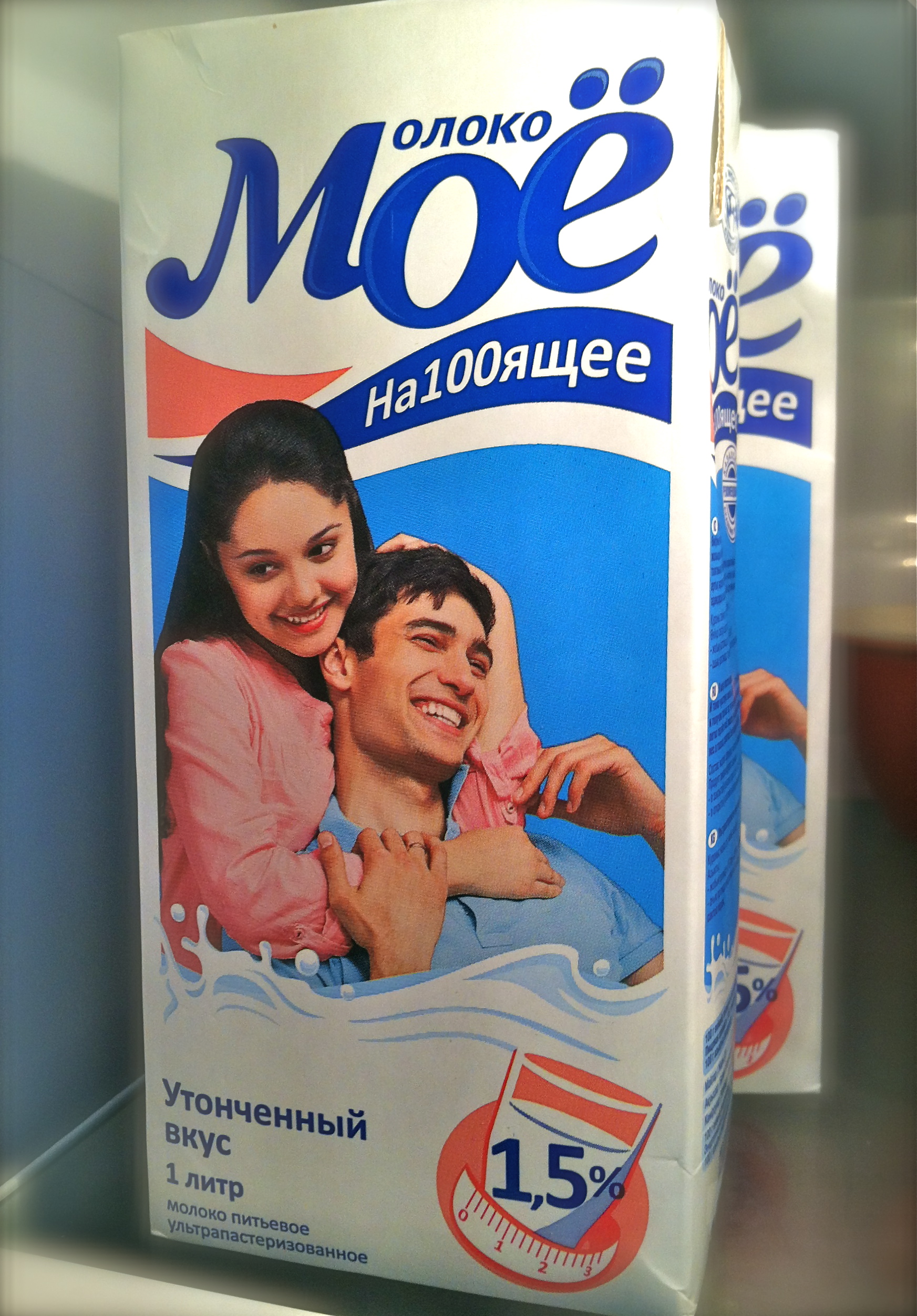
Milk is sold in unrefrigerated one-liter boxes. In America, pasteurization renders milk safe to drink for up to three weeks, if continually refrigerated. In Kazakhstan, we drink milk that has undergone ultrapasteurization or ultra-high temperature treatment (UHT). This process heats the milk to a higher temperature for a shorter amount of time which extends its shelf life and allows it to be stored unrefrigerated.

And while we’re talking milk, let me briefly mention that milk comes in fat percentages ranging from 1.5% – 6%. Skim milk? Fugetaboutit!
IMG_0776

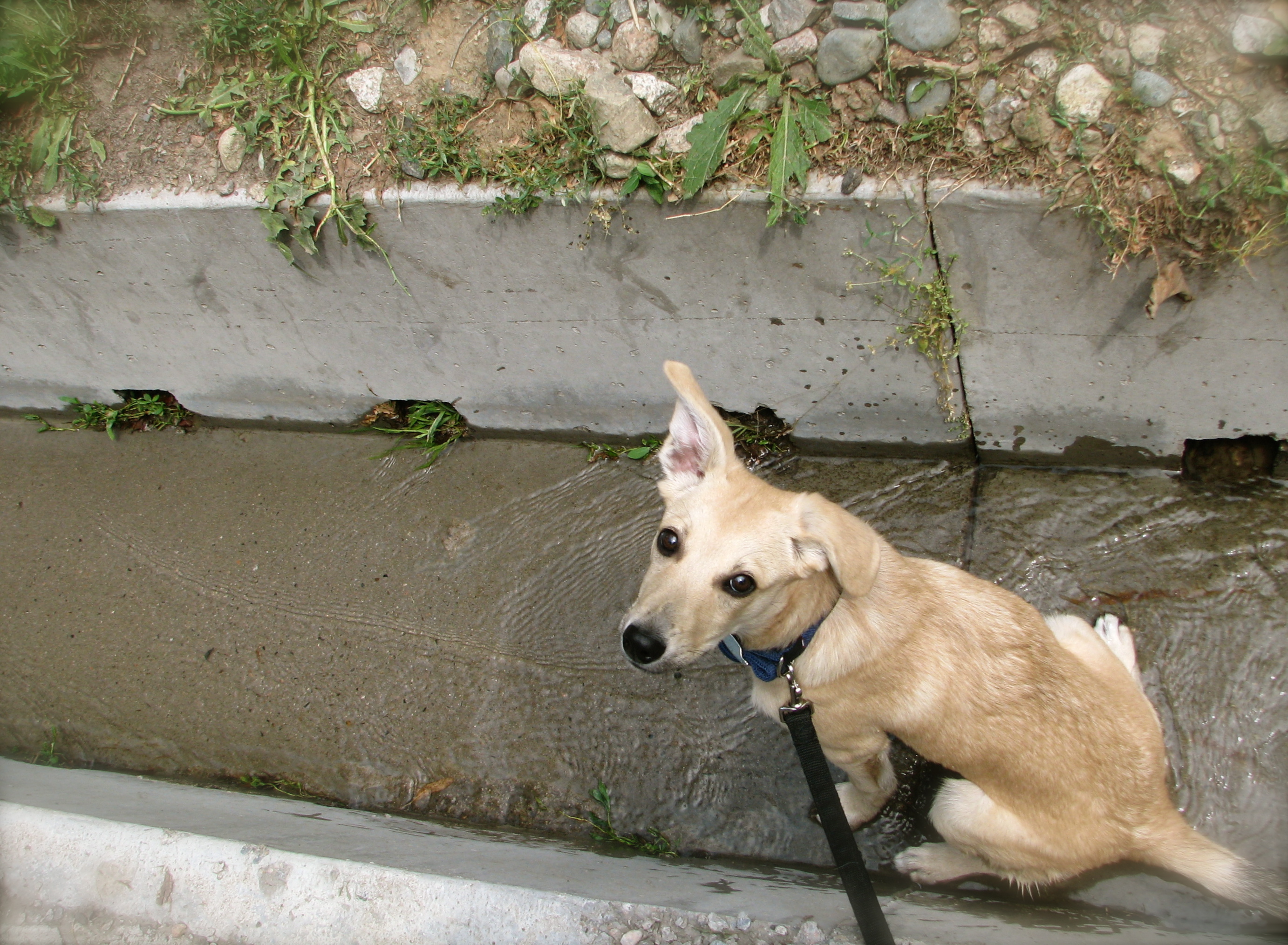
Roadside gutters. These can be gushing with ice-cold mountain water, or bone-dry on any given day. They are part of an extensive network of fountains and channels in Almaty that were designed to irrigate flower beds and green spaces throughout the city. (Mishka thinks they’re pretty great, too.) Almaty has more than 125 fountains that run from May 25th through October 25th (but not, weirdly, if it’s raining).

Oh my god, the high heels. The women in Almaty get DRESSED. UP. I have two theories as to why. The first and most obvious is disposable income paired with new money—wealthy Kazakhs need to flaunt it. (Indeed, Americans have also mastered the art of conspicuous consumption.) The second theory also finds its roots in capitalism, but it can be particularly attributed to the end of communism in this region of the world. Only within that last few decades did Soviet women have unencumbered access to more “feminine” goods—those being lighter, prettier, and less utilitarian; quality cosmetics and perfumes didn’t become widely available until the 1970’s. The modern Kazakh woman is all fem…even to the point of discomfort.

Bus boozers. Okay, so this definitely happens in the U.S., but this sort of boozing is fully acceptable in Almaty.

Gypsy cabs are the same thing as cars. Any car. With a driver interested in making a few hundred tenge. Call it semi-organized hitch-hiking—with a small fee. Personally, I’m still terrified to try it out.

Bickel’s of York. Manufactured in York, Pennsylvania, I’m not sure I’ve ever seen these delectable, gas-station-quality, cheesy-puffs-of-heaven in the U.S., but they are available in several of the grocery stores close to our apartment. God bless America.
IMG_0772

Gold teeth. In the former Soviet Union, dental care was free to those who worked and contributed to the social insurance fund. Gold and silver crowns were not only common and affordable, but very popular. This trend faded with the dissolution of the USSR, and remains today an indicator of provincialism. In Almaty, gold grills are most often seen on security guards, cleaning staff, and market vendors.

Headscarves—not the Islamic variety. The headscarves seen on many older women in Kazakhstan simply signal that they are married. Despite a plethora of babushkas (an Anglicized version of the Russian word for “grandma”—бабушка, pronounced ba-boosh-ka), this long-standing tradition is fading fast in cosmopolitan Almaty.
IMG_0762

Weddings happen every day of the week in Almaty. And you know one when you see one: a decked-out white Hummer limo streaming with artificial flowers carries the happy couple while an entourage of similarly decorated SUVs follows closely behind. The bride, groom, and wedding party spend the better part of their wedding day having photos taken at each of Almaty’s key picturesque settings—I am told, in an effort to keep them from getting too drunk before the ceremony.

The man in the meat market with an ax, a tree stump, and one missing finger.

Which side is the steering wheel on? Even though people drive on the right, it is not mandatory to have a left-hand drive vehicle. I would estimate that one-quarter of the vehicles driven in Almaty are right-hand drive.

Every set of stairs in Almaty has a ramp. Westerners might at first celebrate Almaty for being so progressive, so inclusive—a ramp for every set of stairs! For wheelchairs! For bikers! Nope. Look closer: the ramps are dangerously steep…and actually for strollers…and very strong parents.

Is that more than ten? In Kazakhstan, accuracy is often optional.


Mid-Week Vignette: The “scream-bark”

IMG_0735

Food bowl sentry.

While Hank gets fed two times daily (6 a.m. and 6 p.m.), Mishka gets a proper breakfast, lunch, and dinner. And she always eats like the wild, wormy street mongrel that she is.

Halfway into her lunch one recent day, Hank decided that he would like some, too. He stepped delicately up to her food bowl to take a bite, which caused Mishka to eat even faster. This was clearly meant as a message to Hank who, like Mishka, loves food.

But Hank didn’t back down. Mishka was nearly inhaling her food chunks now, slowly pulling the food bowl out from under Hank with every bite. He still didn’t get it.

The situation reached a feverish pitch. As a desperate, last attempt, Mishka did the meanest thing she could think of: the “scream-bark.” Half-scream, half-bark, straight into Hank’s face.

At last: results! Unperturbed, Hank turned coolly around and left the scene. Unfortunately, what he thought was a smooth exit, well, wasn’t. As he sauntered up to me, it became clear that the scream-bark had not only been effective, it had also sprayed bits of chewed-up dog food all over his face.

fin

The Real Housewives of Almaty

“So, what do you do all day?” is the most common question I get from friends back home, all of whom are hard-working, professional women. Most, like me, do not yet have children. When we were young we heard, “Do what you love! You can be anything you wanted to be.” And we grew to understand that careers and financial independence were more than simple hopes and dreams: they would become the steady undercurrent of our adult lives. Modern women take care of themselves.

So what’s a girl to do when she no longer does?

1.) Hike. The Almaty International Women’s Club caters to expat women from around the world. Modeled after other International Women’s Clubs, the AIWC boasts membership from over 50 countries, holds meetings every Wednesday morning, and offers a wide variety of weekly activities for those plugged into the activity group mailing lists—and for those willing to pay the somewhat steep annual membership fee. I paid the fee, but not to participate in “tea time” at Almaty’s luxurious Intercontinental Hotel, or even for the laminated, purse-sized cheat-sheet listing the Russian words for various fruits and vegetables (though I’ll admit, it’s been pretty darn handy)—I paid it because I like to hike.

Georgina, Kate (plus her dog, Elvis), and Norah* have been the perfect hiking companions. Respectively, they are “American” (in quotations because she is amongst a somewhat unknown group of American citizens who have spent the majority of their lives outside of America; she has a slightly British accent as a result), British, and Dutch. They are elegant, educated, and self-aware. All “followed” their husbands to Almaty. When I am with them I am hyper-aware of my American-ness: cavalier, uncouth, and altogether casual. But all, like me, are now housewives.

After one of our recent hikes, we sat in Kate’s manicured, sun-drenched backyard, stripped our muddy boots off, and ran our toes through the cool grass—probably the nicest grass in all of Almaty. We talked about Cairo. Scuba-diving. Where to get the best online deals on dog food. Kate admitted to hiding in the bathroom during her first AIWC meeting. All of us admitted to smoking occasionally…and drinking often. Such is our new reality.

2.) Get a puppy. Then be prepared for a fuzzy, goofy, leaping ball of teeth; a poop factory; an immediate best friend. In any given day, I say more to Mishka (and Hank) than I do to real, live people.

Whipping cream.

3.) Start an online art business specializing in handmade, customizable items for your home including wedding certificates, pet portraits & decor for baby’s room! Shameless self-promotion: my Etsy site, Bells Barks & Babes, will be up and running by August 16th.

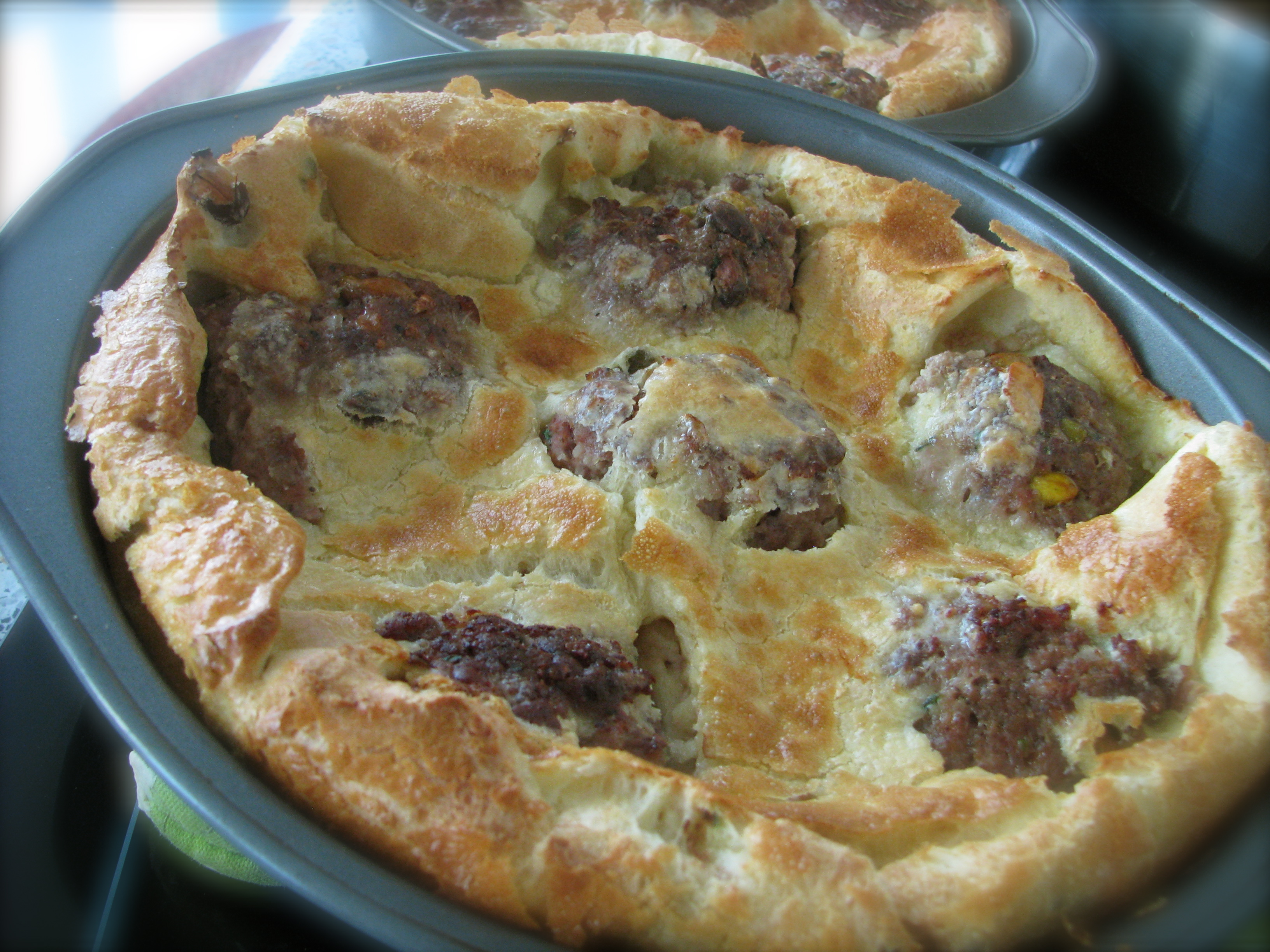
4.) Learn how to cook. Thanks to the internet, Nigella Lawson, and my brave husband, I’ve managed the following (in no particular order): lemon curd, belinis (Russian pancakes), tacos, coleslaw, thai chicken noodle soup, vanilla pudding, “toad in the hole,” a banana custard tart, spaghetti with homemade meatballs, potato-broccoli-cheese soup, mixed berry crisp, bread pudding, chicken fajitas, and bacon quiche. Given Sam’s penchant for British flavors, and the unpredictable availability of ingredients in Almaty, I’m feeling pretty damn proud of this list.

“Toad in the Hole”

5.) Learn Russian. Ugh.

6.) Run. My savior—despite the fact that in Almaty, one is either running up a hill or down one. I’ve been lucky enough to have a 15-year-old as a trainer all summer, and my god is she fast. Thanks to her, I plan to blow my half-marathon PR out of the water come September 8th.

7.) Clean. I love cleaning.

8.) Get a real job. I would estimate that it takes two months to get used to something. Psychological research has even shown that people tend to develop a preference for things merely because they are familiar with them (the so-called “mere-exposure effect”)…and I have gotten pretty comfortable with my daily practice in housewifery. The best way I can describe it is that each day is like a weekend day: they’re best started early and with a plan in mind. Unfortunately, each day is also like a weekend day in the sense that you feel like it could go on forever—boundless potential!—but it’s never quite as long as you anticipated.

The truth is, despite the obvious perks of being a housewife, I can’t shake the feeling that I’m not pulling my weight; that I’m not contributing to something larger than myself. Both ideas are frightening, foreign, and feel, well, wrong. So I’ve applied for a job. I’ve had an interview for the job. And now, in addition to drawing, hiking, blogging, running, cooking, cleaning, and avoiding puppy-teeth, I’m also keeping my fingers crossed.

*For privacy, these names have been changed.

Photomontage: ALMATY

IMG_3285

IMG_3279

Turtle park.

IMG_3275

Old Soviet bus.

IMG_3281

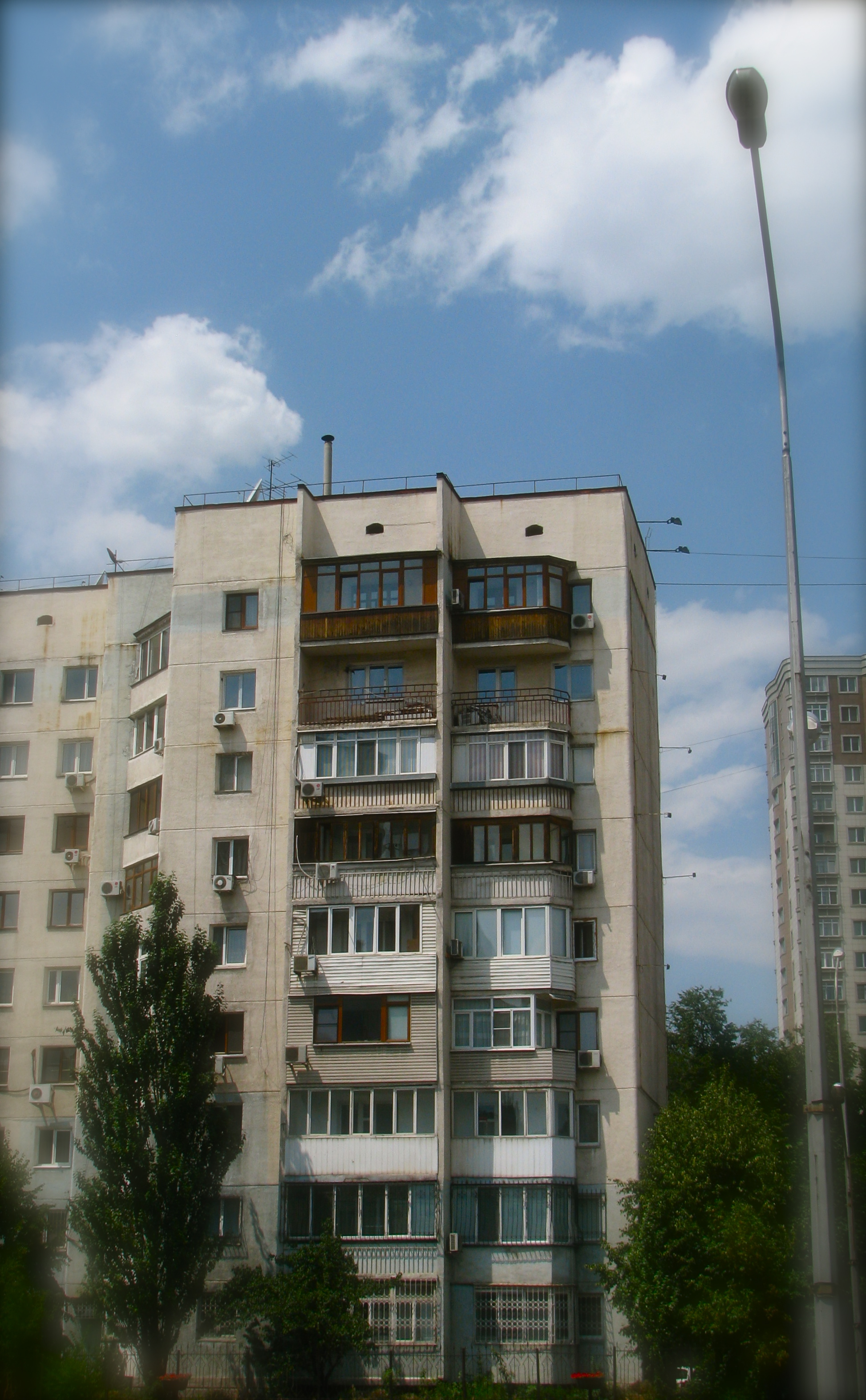
Ours is the middle building: the Audi building.

IMG_3282

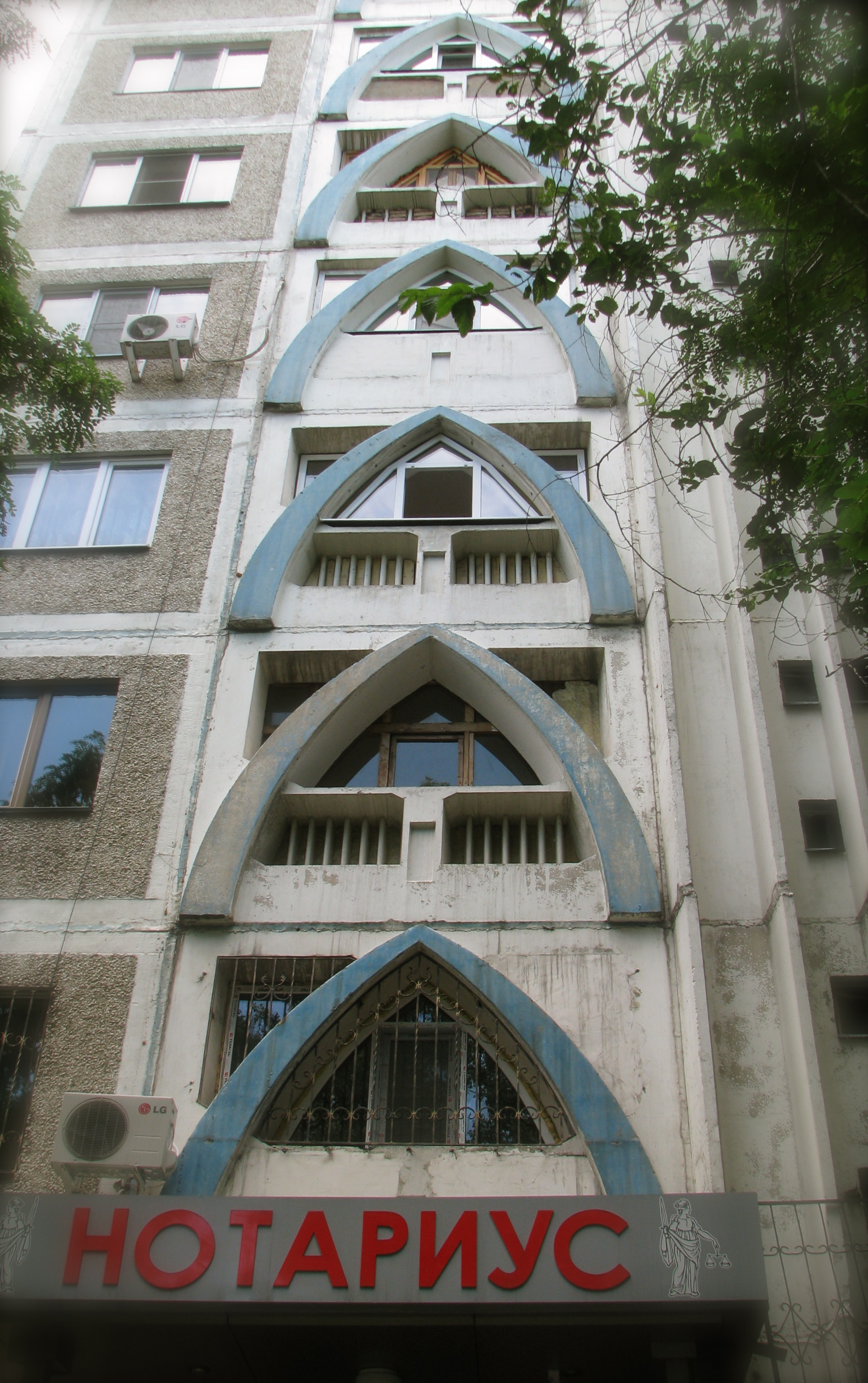
“Notary”

IMG_3287

Alley vegetable stand.

IMG_3286

IMG_3292

The birthplace of the apple.

IMG_3289

Mishka takes a dip in a roadside gutter.

IMG_3290

“Open up happiness” (in Kazakh & Russian)

IMG_3291

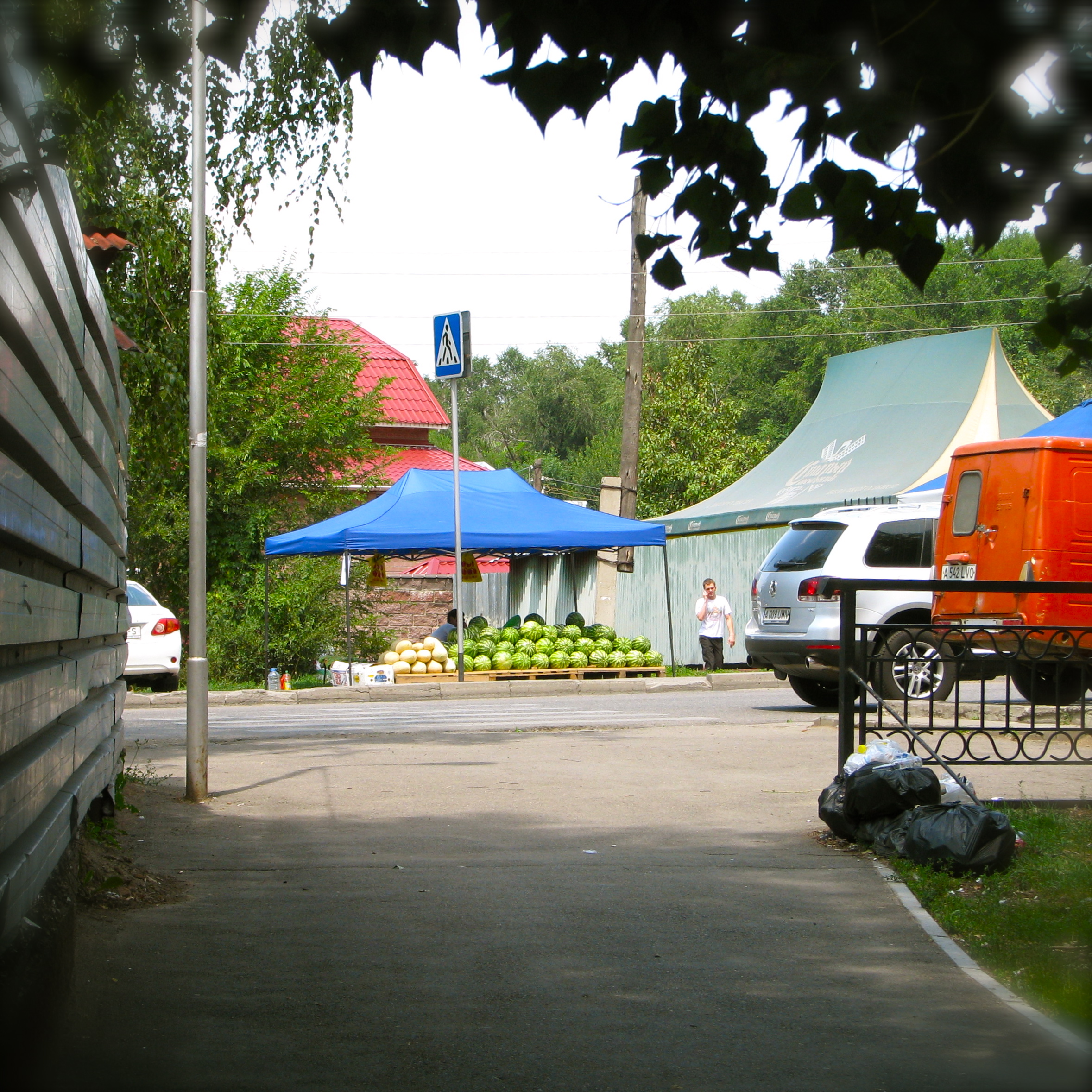
Watermelons.

IMG_3295

IMG_3296

IMG_3297

IMG_3299

Canal path tunnel.

IMG_3300

IMG_3304

IMG_3305это все
“that is all”